Tuesday, 12 April 2011

Thank you, Erma


I've posted a few times (such as here) about how important it is, in my field of work, to maintain a sense of perspective: the perfect (hard to attain, impossible to maintain) versus the workable.

Having no particular reading matter on the go at present, I picked up one of my favourite browsing books: Frank Muir's fabulous compilation The Oxford Book of Humorous Prose. This morning I revisited an old favourite, and it chimed in perfectly with the above sentiments.

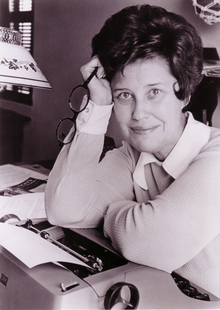
I've never been a mother, but I can so easily understand the pressures to 'get it right' that add immense stress to an already challenging role. Erma Bombeck (1927-1996) was a superb humorist, and it's her wonderful "What sort of mother would... " article that Frank Muir introduced me to. If you've ever been tempted to think that you're not good enough, read it here on the equally encouraging Parenting Reality blog.

Once more, the message is loud and clear: declutter when the changes will help you to live your life with comfort and relaxation. If some simple changes in procedure and environment can lower your blood pressure and give you more opportunity to enjoy your time on this mortal coil, that's when the decluttering profession is here to help you make them. But don't put it off because you feel you're never going to achieve perfection. Do it to make things better for you - and those you love.

Saturday, 9 April 2011

Clutter: a relative term

Our new apdo-uk Facebook page is already proving a valuable source of information. One of our members has today used it to point me towards an article in today's Guardian by Oliver Burkeman.

On the face of it, it would appear to be a somewhat cynical attack on what he describes as "Britain's burgeoning anti-clutter industry". However, a complete read of the article reveals that what he's actually saying makes a great deal of sense: he's urging a rational balance, an appreciation of what constitutes clutter and what is simply a part of the life you lead.

I'm delighted by the rationale in this paragraph: "..."clutter" is inherently subjective, denoting a certain kind of problematic relationship between you and your things, rather than things themselves... Clutter exists only when those things exert a mental drag, or get in the way of living, in line with the old Afrikaans proverb, "Alles wat jy besit vat van jou tyd" — "Everything you own snatches at your time.""

I couldn't agree more. I have worked with many clients over the years, and there's no doubt that one client will start where another left off: in other words, problems with clutter are those of the perception of the individual, and an acceptable state of 'approximate order' to one person might be unacceptably chaotic to the next. [I blogged about exactly this distinction in this entry last year.]

I've walked into houses where my first thought has been "what on earth do you need my help for?", only to find that the cause of the problem is, by my own personal standards (which of course are not relevant in this context), a cupboard in a very mild state of disarray; but if that's causing confusion, inefficiency or distress to the owner, then it must be addressed, and that's when I'll do my best to come up with working solutions for them. Conversely, I have brought clients from a state of complete helplessness - no clues about the location of a single thing in the house - to an improved, more efficient, but certainly far-from-minimialistic state - and that state would probably appear, to the impartial observer, 'worse' than the starting point of the previous scenario.

"Compulsive hoarding is a favoured topic of reality shows and human-interest magazines, but it's easy to imagine the opposite psychological disorder: the compulsive expunging of stuff." Quite. Just as a popular TV show, Supersize vs Superskinny, demonstrates that it's not just the obese that are at danger from ill health but also those whose dysfunctional attitude to food expresses itself in the opposite way, the same can be said of decluttering.

If we are, naturally, of the mindset that allows us to live like Henry David Thoreau, then fine; but most of us, in real life, have 'stuff' that both serves us and, to a certain extent, defines us. To remove the real clutter - the detritus that "snatches at our time" (I love that phrase) - will be liberating, will allow us to concentrate on things that really matter; but to "compulsively expunge" is as likely to leave us bereft and without structure or definition. The key is to find the balance between the two; and this is the sort of assistance that should be provided by the best decluttering consultant. Not judgement, nor imposition, but a set of ideas and possibilities, a toolkit of suggestions and challenges, and the personality to motivate, guide and encourage our clients to reach a state of comfort with their surroundings, allowing them to live, work and play without distress.

Friday, 8 April 2011

To declutter - or to store?

In the decluttering-and-organising industries, there are many related services that are helpful in our work. At the recent apdo-uk members' seminar in London, we heard from three such businesses: a home stager, an ebay sales company, and a storage-and-removal firm.

This last industry caused some head-shaking and discussion among our membership. The removal element, certainly: we're often asked to help people 'get it sorted' before they move home. But storage? Surely that flies in the face of all that we, in the decluttering world, are trying to help people achieve? If we encourage our clients to use storage facilities, aren't we just opting for the easy get-out to show a visible change without addressing the underlying problems?

So it would appear. And in many circumstances, that's undoubtedly true. It would be so easy to simply ship all extra belongings off-site, leaving a beautifully clear home - but the underlying clutter would remain, un-dealt-with. (It reminds me of a story I heard - and even if it is apocryphal, I'm certain it's founded in truth - of the business that had a 'clear desk policy', which resulted in every employee storing huge piles of untidy paperwork UNDER the desk.)

However... I wonder. I thought back to a period of my own life (nearly twenty years ago) when storage facilities were vital, and I worked my way through the reasons. They fell into two very specific categories: the practical and the emotional.

My first marriage was over. It was nobody's fault; it was simply a marriage that should not have happened in the first place. It was sad, it was painful, but it was inevitable, and in the end, all for the best. However, the practical issues that arose from the split were especially hard. We sold our home; my ex-husband rented a small flat, and took what furniture and belongings he wished to keep; and I moved back to my parents' home for a few months to get my life in order. (I was made redundant at the same time, just to add insult to injury.)

My parents lived in the small maisonette in which I'd grown up. They had no extra storage space for the furniture, white goods and general houseware that I'd accumulated during seven years of co-habiting and marriage. I knew that I would, in the not-too-distant future, be returning to a place of my own - that I'd buy or rent a flat. I had no need of the table & chairs, the cooker, the china, the microwave and the rest while I lived in my childhood home - but I knew I'd need them some day, when I once more had a home of my own. So it was a no-brainer: storage was needed.

The second part of the equation was the emotional side. Yes, before I left the marital home we'd had a good de-junk. It was easy to deal with old catalogues and newspapers, garden rubbish and broken kitchen equipment - that was fine. But what about the other stuff? The letters, written in better times? The photos - oh, goodness, the photos? The wedding album? The marriage was over; but I didn't want to erase that whole period from my life. Including our time at college, it covered a whole decade - not to be dismissed lightly. Should I throw out everything relating to that period?*

The fact remains that I wasn't ready to deal with that stuff, and I knew it. There was no way that, in that emotionally raw and fragile period of the few months (or even, as it turned out, years) after the breakup, that I was ready for that sort of decision-making. I wasn't working in the decluttering industry then, but my personality was geared up for efficiency and organisation - and even I couldn't manage that.

So in came the storage. In my case, I was fortunate enough not to have to find the money for it: my belongings were boxed up, labelled, and deposited in the attics and garages of three or four kind and understanding friends around south London. But paid or unpaid, that storage was vital. It meant that I could concentrate on reordering my life, finding my emotional stability again, the practical elements of finding a new home.

I left my childhood home after a six-month breathing space, and rented a tiny (and I mean tiny) part-furnished studio flat for the next year. At this point, I cleared some of my belongings; but many of them remained in those garages and attics until, finally, I bought my own one-bedroomed flat. Eighteen months after the marriage breakup, I reclaimed everything from my kind friends, and got my life back on track again. I was ready to refit, restart, and declutter.

My point in telling this story is that there are two major reasons for a legitimate use of storage facilities in the decluttering process. On the practical side, your life might take you anywhere. A business posting overseas; a member of the family travels on a gap year; university; relationship breakdown; the death of a parent.

On the emotional side, one needs to be ready for decluttering. There are some decisions that can't, and sometimes shouldn't, be made instantly. If storage helps you to achieve clarity in your living space, allowing you then to gradually filter the more difficult belongings back in (or out), then there is nothing wrong with that.

One of my clients had a major storage area in the house. It related to an incredibly difficult, painful and public divorce. That one room was used to hide the past until she was ready to face it. And face it we did: we worked together, for (if I remember rightly) two long, solid days, sorting into charity-keep-sell-recycle-dump. There were times that my client was distressed by what we found (we had a nickname for these items: UXBs, or UneXploded Bombs, that might jump up and explode in her face at any time). This was several years after the event, and it was hard for her then. Imagine how much harder it would have been when she was still punch-drunk and raw from the break.

The rest of her house was immaculate. I mean, immaculate. Beautiful, decorated with exquisite taste, planned with intelligence and creativity. She had her haven, and the past was in storage - albeit in the same house. Only when she was ready, and she needed that extra room for other purposes, did she turn to getting professional help; and the process was, in turn, made much easier by the fact that the rest of the house was under such excellent control.

There is one other excellent reason for hiring storage space: you need an extra room for one specific purpose, and it's a more cost-effective solution than moving home. I have heard of people who have extraordinary collections of items, which are precious, valuable and interesting to them, which simply won't fit in their home. The rental of a storage space - especially if it's one of those that is easily accessible on demand - keeps the home as a home, the collection safe and sound, and the financial outlay for such storage keeps in mind the value of such a collection. Let's face it, it's no different from renting a garage to keep one's car in (my father rented a garage for years in the basement of a nearby block of flats when he wasn't happy leaving a motor at the mercy of on-street parking in East London).

My decluttering colleagues can stop panicking. I'm not recommending that clients should push things out of sight - into a room at home, or one that is rented (which is effectively what storage hire is). Many people are ready to dive right in, get it sorted, save space and save money. What I am saying is that storage facilities are not the work of the devil, or the antithesis of our work to help people to achieve calm and ordered living spaces: they can be, for practical and/or emotional reasons, a necessitous breathing-space, an opportunity to think and make decisions, and a vital aid in seeing the wood for the trees.

*If anyone is interested, yes, I do have just a small amount of items relating to that decade. There are photographs - and yes, I still have my original wedding albums; there are a couple of diaries; there is a little envelope full of rather clever cartoons that my ex-husband, a talented humorist, used to leave on domestic notes, which even today make me smile. These are recollections of good times in a ten-year period that was still an important and valued part of my life.
Monday, 4 April 2011

Tidying the children


A 'mention' on Twitter just now got me thinking:

Perhaps @workingorder has tips for tidying up children as well as homes & offices.

First reaction: good grief, no. How on earth does one do that?

Second reaction: how would I know? As a non-parent, I've never been there, so how would I dare to comment?

Third reaction: well, actually...

It's been clear to me, throughout my experience of 'stuff management', that young folk are often very receptive to a structure for organisation. And before you fall about laughing, I don't mean that they have a natural dispensation to the minimalistic. What I mean is that they like life made as easy for them as possible (and I can empathise with that sentiment, believe you me).

One household of my acquaintance had an adorable toddler: a little lass of about two years old. Part of our work was to create a special area for her in the side area of the kitchen - a sort of breakfast area, half-divided off from the kitchen proper but visible to mum. As a result of our work, a sideboard was relocated in there (from the dining room, where it had taken up too much room so the doors were unopenable, and the stuff stored inside inaccessible as a result).

At the perfect height for Small Person, we stocked it with little plastic baskets: one for Lego, one for dollies' clothes, one for Precious Things... you get the idea. On the top surface stood larger toys: the doll's house, the toy train. The point is, Small Person loved this. Putting the right stuff in the right box became as much of a game as working through a jigsaw, and built into the bedtime routine it gave her a natural sense of order.

Ah, you say, but what about teenagers? Here we can appeal to their sense of values. I was thrilled on a revisit to a family to learn that the young teenager had (with no help from me, but with inspiration from what I'd done for mum) set up her own eBay and PayPal account (with parental help & permission, of course). The deal was that, if she sold an item on eBay, the money went into her personal PayPal account... and when there was enough money in there, she was free to spend it on whatever she wanted - usually once again on eBay. Desperate for some reasonably expensive item - an upmarket item of clothing, a game for the Wii, whatever it was - she sold everything that stood still long enough. Result? The item that she really wanted was hers, and an unnaturally tidy bedroom to boot.

The key to all this, however, is always simplicity. There's no point in micro-organising (as I've said in other posts); children or adults, few of us (myself included) have patience for keeping things in a perfect and rigid order. I have no time for filing CDs by composer; if I want to find my recording of Kander & Ebb's Chicago, I know it will be somewhere along the two shelves that contain (loosely speaking) songs-from-the-shows. If I make my life easier in this way, the organising is far more likely to get done than if perfection is insisted upon.

Let kids put books on an easily-accessible set of shelves, but with no more ordering than that, and it's far more likely to happen. Have the laundry basket in the place it's most likely to be used, rather than through a door and into another room. If they won't put shoes tidily on a rack, have them chuck 'em in a box the minute they get through the door.

One final example. One of my favourite clients was a delightful chap who has ADD (Attention Deficit Disorder) and his wonderful wife. He taught me just as much as I was able to help him: the simpler the system, the easier it is to do, the more likely he is to do it. If I'd said "put your bank statements in chronological order", it would never have happened; but saying "just put them in that drop-file with the other statements from the same bank" still narrowed down where he'd find them, and the process was far more likely to happen. "Putting his books away" meant "sling them all in that space of two shelves", not "put them in order". Bite-sized chunks - very large ones - were the order (pardon the pun) of the day.

So yes: there are ways to get some buy-in from the younger members of the family. And, who knows? Some of these ways might just apply to the bigger people in your life as well.

Sunday, 27 March 2011

Applause for inspiration

I am presently collapsed in a little heap at the end of a madly busy but hugely enjoyable and inspiring month - which in its turn followed an equally enjoyable and creative time directing a show! A cold seems to have come and got me as soon as I paused for breath, but that's par for the course.

This period of insane activity was concluded in huge style by my attendance at The Big Jelly - a one-day seminar across in Telford, Shropshire: "A chance to meet other business owners, freelancers and home workers to learn, work, chat and collaborate". The speakers were superb, and I was privileged to facilitate one of the six lunchtime 'breakout' sessions.

This splendid photo was taken by the lovely Phil Barrett of PB Artworks - a sensationally talented photographer whose work I have admired ever since I bumped into him on Twitter, and I'm chuffed to bits to have such a great image and his permission to use it.


The photo is taken as I'm applauding the inspiring talk given by Daniel Priestley. Together with the other speakers, he's overcrowded my brain with great ideas and motivation to make much better use of my skills and abilities, my blog and my website, and much more. By the end of my 'breakout' session I realised that I had so much more that I hadn't had time to share: this blog will become the platform for sharing all the stuff I'm so passionate about.

Watch this space over the next few weeks as I start to put these ideas into practice, and to share valuable ideas and inspiration with you.

Sunday, 13 March 2011

Unnatural disasters

The events of the last few days in Japan prey upon all our minds, and so they should. Human suffering and the fury of nature to such devastating effect must take us out of our 'normal' lives (as a friend on Twitter put it this morning, "Someone irritated you? Broken hoover/washing machine? Cat sick on carpet? So what - you could be in Japan.")

I am sitting here on a Sunday morning (unusually for me - I'd normally be up and about by now) but as I'm in London, in between two events - social and business - I'm staying with a colleague. I am comfortable, unhurried, in a warm bed with a cup of tea, my laptop, and the prospect of a lazy day. I enjoyed a reunion with colleagues of two decades back on Friday, and laughed much and hugged greatly. I ate well, drank wine and slept well; spoke to my husband back in Norfolk and know that I am loved much. I am, in short, very, very lucky indeed.

Prayers are being sent out for those who are affected, and so they should be. I'm not about to get into a discussion about the efficacy of prayer here: all I will say is that my prayers are never for divine intervention, but for the strength, opportunity and inspiration to do the work ourselves.

However, when the appeals go out on Facebook, whether it's for awareness of cancer, Alzheimers, mental health or anything else, I am always inclined to add the website links for the charities supporting those people; if the readers make donations, that will be wonderful; if they simply read and understand better, excellent.

In this case, my mind wanders as I consider the 'charity' route. I have just read a painful comment on a query about charitable giving to help those in Japan: "Forget about your own sick and homeless people - help other countries first." It's a fair point: it's Red Nose Day next Friday, and I cannot help wondering whether this regular and spectacular event will lose support as our focus is elsewhere.

But it shouldn't stop us at least considering how we help, and who, and where. If disasters of these proportions - Christchurch being just a short time ago - bring into sharper focus the need to think outside our own comfort zone, and then to choose wisely the way we use our own resources, that must be good.

I am a regular supporter of Hearing Dogs for Deaf People; it's my 'favourite charity' if I'm asked. When I was involved in the arrangements for the 'reunion' mentioned above, I suggested to the group that any unused funds from the payments we made for food and drink for the event go to charity, and they kindly allowed me to make the choice. In the event, I will split that surplus between my original promise to Hearing Dogs, and to ShelterBox (see below).

So, if you've stayed with me through this rambling Sunday morning thought, here are a few ideas for ways to help that seem appropriate now. I've linked to all their websites. They're all on Facebook and Twitter. Follow. Read. Link. And, where you can, give.
  • ShelterBox provides "emergency shelter and lifesaving supplies for families around the world who are affected by disasters". ShelterBox was 'on the ground' in Japan within 24 hours of the disaster.
  • The British Red Cross "a volunteer-led humanitarian organisation that helps people in crisis, whoever and wherever they are". This well-known and long-established and trusted charity has launched a special appeal for the victims of the Japanese tsunami.
  • Comic Relief helps "poor, vulnerable and disadvantaged people across the UK and Africa". Its unique combination of celebrity and anonymous help, of supporting those at home and those abroad, has been educating us in 'fun ways to give' since 1985. Long may it continue.
Our own economy is in poor shape. As a sole trader, these are not easy times for me. But any concerns I have about my own money, time or lifestyle are as NOTHING to what happens in the rest of the world, and around us here in our own country.

If you are saying prayers for Japan, include prayers for us all to look around us, both further afield and closer to home, at all times - not just in times of newsworthy disaster.

Monday, 6 December 2010

Decluttering: for life, not just for Christmas?

Christmas is a great time for promoting your goods or services. "The perfect gift" will help out many folks desperate to find something more interesting than socks - or whatever your usual standby is for somebody special.

If you're selling 'things', you'll know your market. Whether it's clothes, jewellery, personalised gifts, wine, chocolate or whatever, you can target the necessary audience to attract the people you want as purchasers. Advertisements in local publications, special offers on your website, announcements on Facebook or Twitter.

Services are a little different. We might all benefit from services, but do we want to admit to that need - or do we all enjoy them? A voucher from a beauty therapist can be a lovely idea - but what if your mum (like mine) only ventures to the hairdresser because she has to, and really rather dislikes that kind of attention? No good giving theatre tickets for the panto if the recipient can't imagine anything worse than a chorus of "He's behind you". And we might all say from time to time "I'd love somebody to come and clean my house", but would the response be "are you saying my house is dirty"?

And that's my problem when it comes to my decluttering services. It sounds wonderful: give a decluttering day for a Christmas gift. But I wonder. In my experience, decluttering sessions are at their most successful when the person suffering from the clutter has made that decision for themselves. The daughter that says "My mum needs your help", the friend who says "My friend's house is a tip", and asks me to help out, might be acting with the best of intentions; but the mum, or the friend, are more likely to feel (a) threatened, (b) insulted or (c) terrified - or some combination of the three.

When my clients have reached the decision to get professional help with their clutter - whether it's an office, a wardrobe or a house - it's not (I'm told) any of these things. Liberating, enjoyable, fun, inspiring - all these things have been said about the process of Getting It Sorted.

However, these have all been people who have come to me of their own accord. They've reached a point where they feel that the help of an outsider will be of benefit to them; a fresh pair of eyes, some ideas on storage and the use of space, and (dare I say it) a bit of gentle nagging; inspiration, motivation, support and sympathy. But none of this can happen until they've come to that conclusion for themselves.

It's the old joke: How many counsellors does it take to change a lightbulb? One - but the lightbulb has to want to change.

So that's why I don't promote decluttering sessions as a gift. If somebody has discussed it with a loved one and between them, they've decided that that's the gift that is wanted, and one pays for the other, that's absolutely fine; but like the panto-hater getting the ticket for Jack & the Beanstalk, if it's not what they want, it will be a wasted gesture - no matter how much you may think they need it.

Decluttering is a gift: but it's one you're more likely to need to give to yourself.